
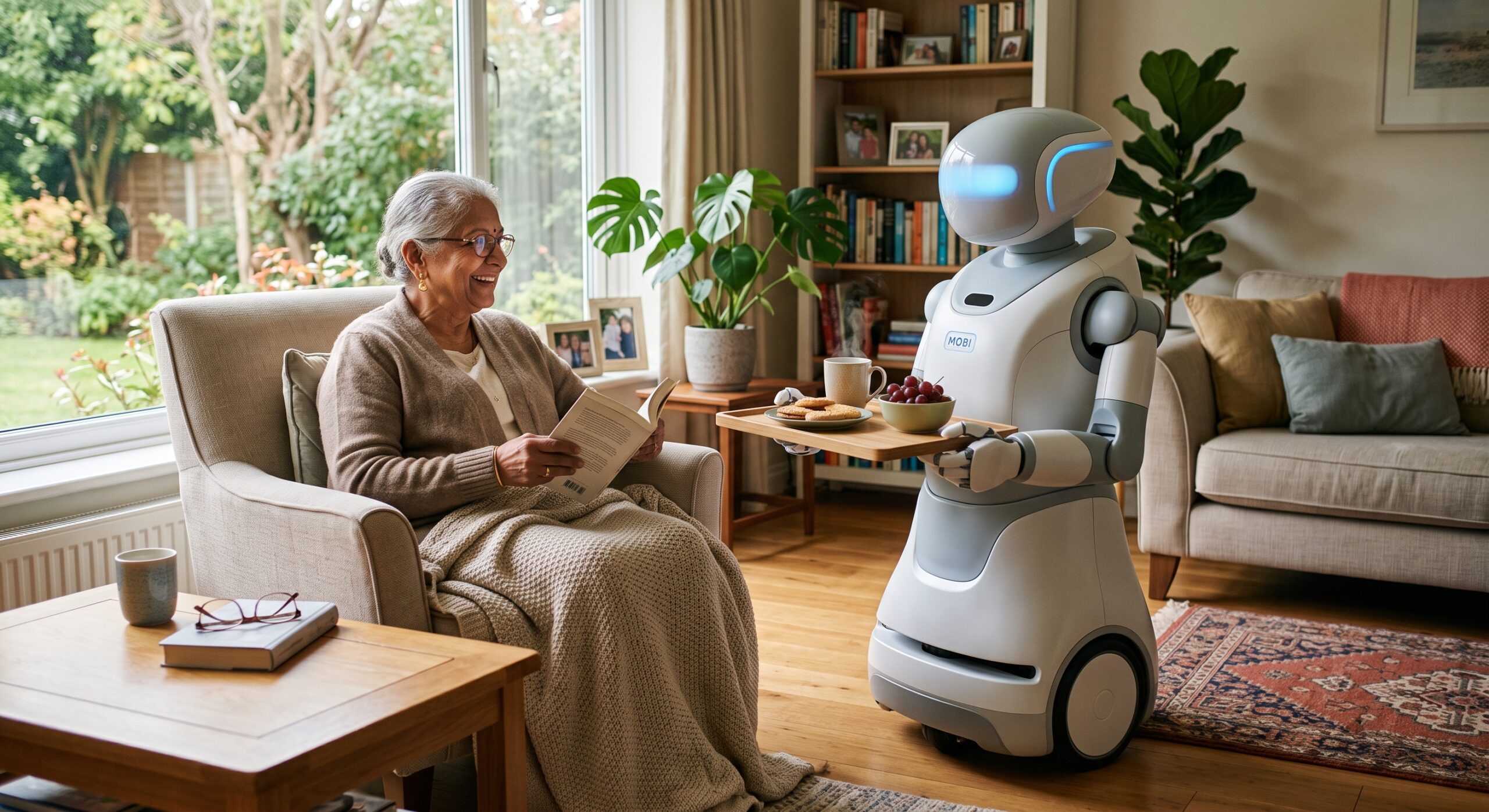
In recent months, slick promotional videos have flooded the internet, showing humanoid robots effortlessly folding laundry, mixing drinks, and tidying up living rooms. With Goldman Sachs estimating that the global market for humanoid robots could hit a staggering $38 billion by 2035—and some analysts projecting hundreds of billions by 2040—startups, tech giants, and automakers are locked in a fierce race to cash in.
But beneath the hype and carefully staged demonstrations, how close are we actually to having a fully autonomous robot helper managing the chaos of our homes? According to leading robotics experts, the answer requires a serious reality check.
“Humanoid Theater” vs. Reality
Rodney Brooks, a former MIT professor and co-founder of iRobot, refers to the current wave of robot demonstrations as “humanoid theater”.
In these controlled promotional videos, robots appear to navigate seamlessly. However, private homes are not standardized factories; they are constantly changing environments filled with obstacles, clutter, pets, and children. A full-sized humanoid robot possesses roughly eight times the kinetic energy of the smaller demo robots typically seen at trade shows. Without perfect balance and situational awareness, these machines remain far too dangerous to operate autonomously around people.
Another massive hurdle is the human hand. Our hands contain thousands of touch-sensitive nerve fibers that allow us to instinctively adjust our grip, feel weight, and know exactly how much force to apply. Robots lack this nuanced sense of touch. Brooks points out that if you watch closely when a demo robot places dishes on a counter, it often drops them from just above the surface because it relies entirely on vision rather than force sensing.
The Secret of Teleoperation
The success of AI models like ChatGPT has fueled hopes that humanoid robots will soon experience a similar breakthrough. However, understanding the physical world and predicting the consequences of physical actions is vastly different from processing language.
So how do the robots in those impressive demo videos manage to perform complex tasks? The secret is teleoperation.
For example, the friendly-looking robot “Neo,” which is currently available for pre-order at around $20,000, is marketed as consumer-ready for 2026. Yet, for many complex tasks, Neo is not fully autonomous; it must be controlled remotely by a human operator wearing a VR headset. Companies use this teleoperation data to train the robots, hoping they will eventually learn to perform tasks independently. But as Brooks warns, transitioning from teleoperation to full autonomy is a completely different and incredibly difficult problem.
This reliance on remote human operators also introduces severe privacy risks. Introducing a teleoperated robot into your home means allowing an unknown operator, potentially in another country, to view a live feed of your private space.
The Push for Human Lookalikes
Despite the technical and privacy hurdles, developers are pushing forward, focusing heavily on making robots look and act more human to earn our trust.
In China, companies are developing robots with realistic silicone skin, dozens of joints that mimic human muscles, and integrated AI to analyze and respond to human facial expressions. One new robot, Moya, even features a built-in heating system to make its skin feel warm to the touch, and utilizes hidden cameras to maintain natural eye contact.
Companions for a Lonely World
The drive to humanize robots isn’t just about chores; it’s about companionship. In Japan, where the population is rapidly aging and single-person households are surging, loneliness is a growing crisis.
Researchers at Japan’s Riken Institute have developed “Nicola,” an AI-powered humanoid with the face of a child. Outfitted with 29 soft silicone actuators in its face, Nicola can smile, gasp, and frown, mimicking artificial muscles. The goal is to see if synchronized facial expressions and vocal cues can help lonely individuals form meaningful emotional connections with machines.
Yet, researchers must tread carefully to avoid the “uncanny valley”—the phenomenon where a robot looks almost human but not quite, causing people to feel creeped out rather than comforted.
As the technology advances, the ultimate question remains: Do we really need our dishwashers and companions to look exactly like us? Or are we simply waiting for a machine that can safely and reliably get the job done, regardless of its face?
Leave a Reply