
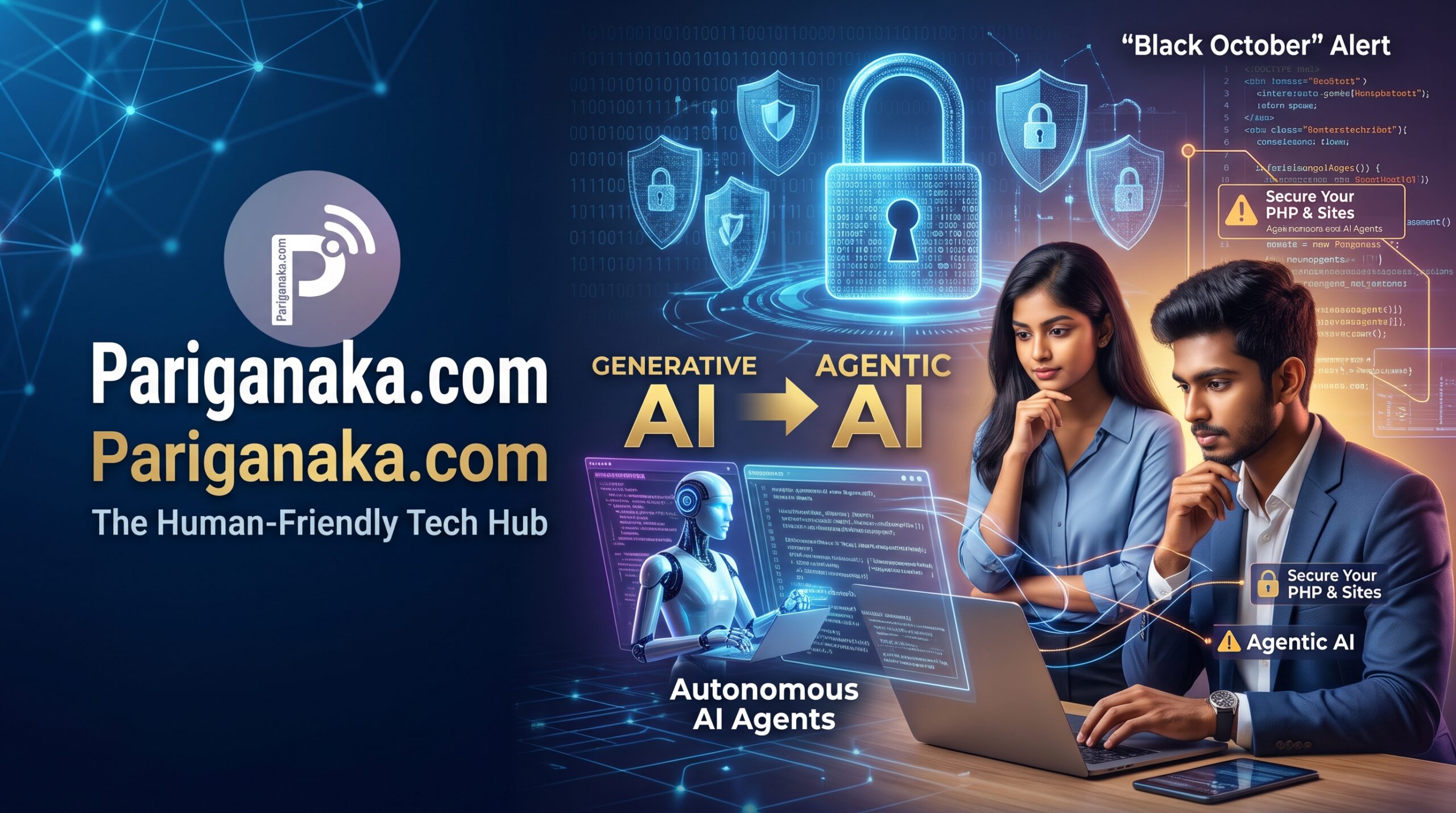
Artificial Intelligence is no longer just a chatbot that answers questions or writes emails. A massive shift is underway across the global tech landscape: the transition from Generative AI to Agentic AI. At the same time, a series of global cybersecurity alerts—dubbed “Black October”—has reminded developers and everyday users alike why digital safety must evolve alongside AI.
At Pariganaka.com, we break down these major confirmed developments in simple, practical terms so you can stay ahead and stay secure.
1. What is “Agentic AI” and Why is Everyone Talking About It?
For the past few years, using AI meant typing a prompt and waiting for a response. Agentic AI changes the game—these are autonomous AI systems capable of pursuing complex goals, using software tools, writing code, and completing multi-step workflows with minimal human intervention.
Confirmed Industry Milestones:
- Meta’s “Muse Spark Open”: Meta unveiled Muse Spark Open, a powerful open-weight, multimodal AI model built specifically for complex coding and agent-based workflows. Remarkably, it is designed so developers can run it locally on compatible computers (including Macs), giving businesses and creators much greater control over their data privacy.
- No-Code Software Creation for Everyone: Platforms like Replit Agent 4 have now crossed 50 million users globally, allowing non-coders to design, build, and launch complete software applications using plain, everyday language.
- Seamless Data Connectivity: Tech giants like Google and Microsoft have rolled out enterprise updates using the Model Context Protocol (MCP)—an open standard that lets AI agents securely read and interact with business databases without copying sensitive data. Meanwhile, xAI has expanded multimodal interaction with the release of Grok Voice 3.0.
What this means for you: You no longer need to be a senior software engineer to build digital tools for your business or studies. However, because AI agents can act autonomously, keeping a “human-in-the-loop”—reviewing AI actions before they go live—is now the #1 best practice.
2. The “Black October” Cybersecurity Alert: Protect Your Websites
While AI is helping developers build faster, it is also being used to find security flaws at machine speed.
Cybersecurity researchers and international agencies (including CERT alerts) have issued urgent warnings regarding a wave of global cyber incidents driven by newly discovered software vulnerabilities, most notably PHP2Shell, alongside flaws affecting Node.js, GitLab, and LiteLLM.
Because a huge portion of the internet—including WordPress websites and Laravel applications widely used by Sri Lankan businesses, blogs, and e-commerce stores—runs on PHP, these vulnerabilities are critical to address.
3 Simple Steps to Stay Safe Today:
- Update Immediately: If you run a WordPress site or custom PHP web application, update your PHP version, CMS core, and plugins to the latest security patches immediately.
- Audit AI Permissions: Never give autonomous AI plugins or third-party agents unrestricted admin access to your databases or credentials.
- Backup Regularly: Keep an offline or cloud-isolated backup of your website files and databases before performing updates.
3. Smart Home & Consumer Tech: Apple’s Next-Gen HomePod mini
On the consumer hardware front, Apple officially announced the next generation of the HomePod mini. The upgraded smart speaker features enhanced Siri AI integration, richer acoustic engineering, and fresh new color options—signaling that smarter, conversational AI is moving deeper into living rooms.
Leave a Reply