
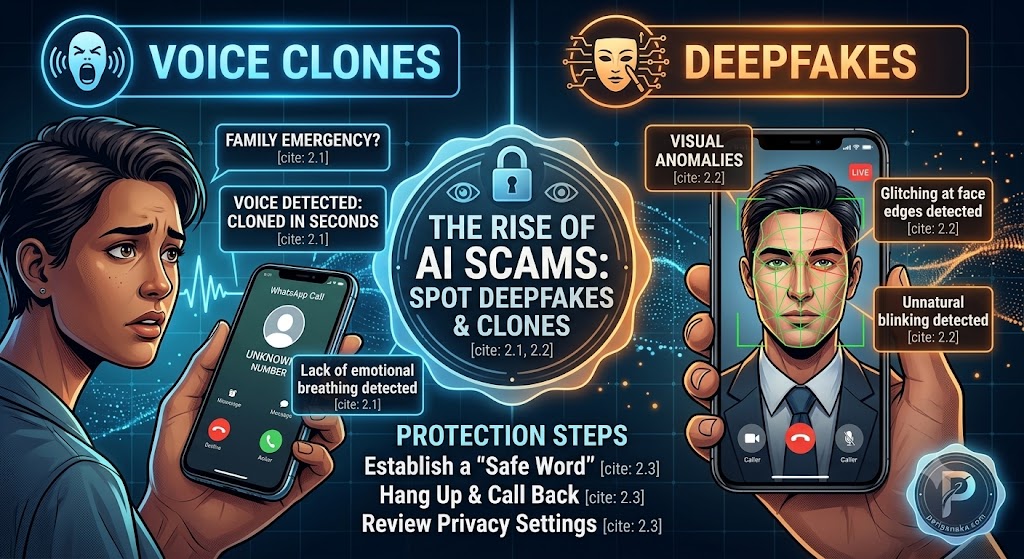
Artificial Intelligence has brought us incredible tools, but it has also given cybercriminals a terrifying new weapon. We are no longer just dealing with poorly spelled phishing emails or fake SMS links. Today, scammers are using AI to perfectly clone the voices of your loved ones and create hyper-realistic fake videos (Deepfakes).
Here at Pariganaka.com, we want to make sure you are prepared. Here is how these scams work and, more importantly, how you can spot them.
1. The “Family Emergency” Voice Clone
This is currently one of the most common and effective AI scams worldwide.
- How it works: Scammers pull a short audio clip of your family member’s voice from a public social media video (like TikTok, Instagram, or Facebook). Using AI, they clone that voice in seconds.
- The Attack: You receive a frantic phone call from an unknown number. You hear your child, sibling, or parent crying, saying they are in trouble (e.g., a car accident or arrested) and need you to transfer money immediately.
- How to Spot it: The caller will usually try to keep you in a state of panic so you don’t have time to think. The voice might sound slightly robotic or lack natural emotional breathing, though AI is getting better at faking this.
2. Deepfake Video Calls
It is not just audio; video is being manipulated in real-time.
- How it works: Scammers use deepfake software to map someone else’s face onto their own during a live video call (often on WhatsApp or Zoom). They might pose as your boss, a bank official, or even a celebrity running a fake giveaway.
- The Attack: They will instruct you to authorize a transaction, share a password, or click a malicious link while looking exactly like someone you trust.
- How to Spot it: Look closely at the edges of their face and their hair. Deepfakes often glitch when the person moves their hands in front of their face or turns their head quickly. Unnatural blinking or out-of-sync lip movements are also massive red flags.
3. How to Protect Yourself and Your Family
You don’t need expensive security software to beat these scams—you just need a plan.
- Establish a “Safe Word”: Sit down with your family and agree on a secret word or phrase. If someone calls claiming to be a family member in an emergency, ask for the safe word. If they don’t know it, hang up.
- Hang Up and Call Back: If you get a suspicious call from a loved one or a bank official, hang up immediately. Dial their known, saved phone number from your contact list. If they are actually in trouble, they will answer.
- Make Your Social Media Private: The less public audio and video you have of yourself online, the harder it is for scammers to clone your identity. Review your privacy settings on Instagram, Facebook, and TikTok.
Stay Alert! Seeing is no longer believing in the digital age. Always take a deep breath, verify who you are talking to, and never send money under pressure.
Stay tuned to Pariganaka.com for the latest updates on keeping your digital life secure!
Leave a Reply