
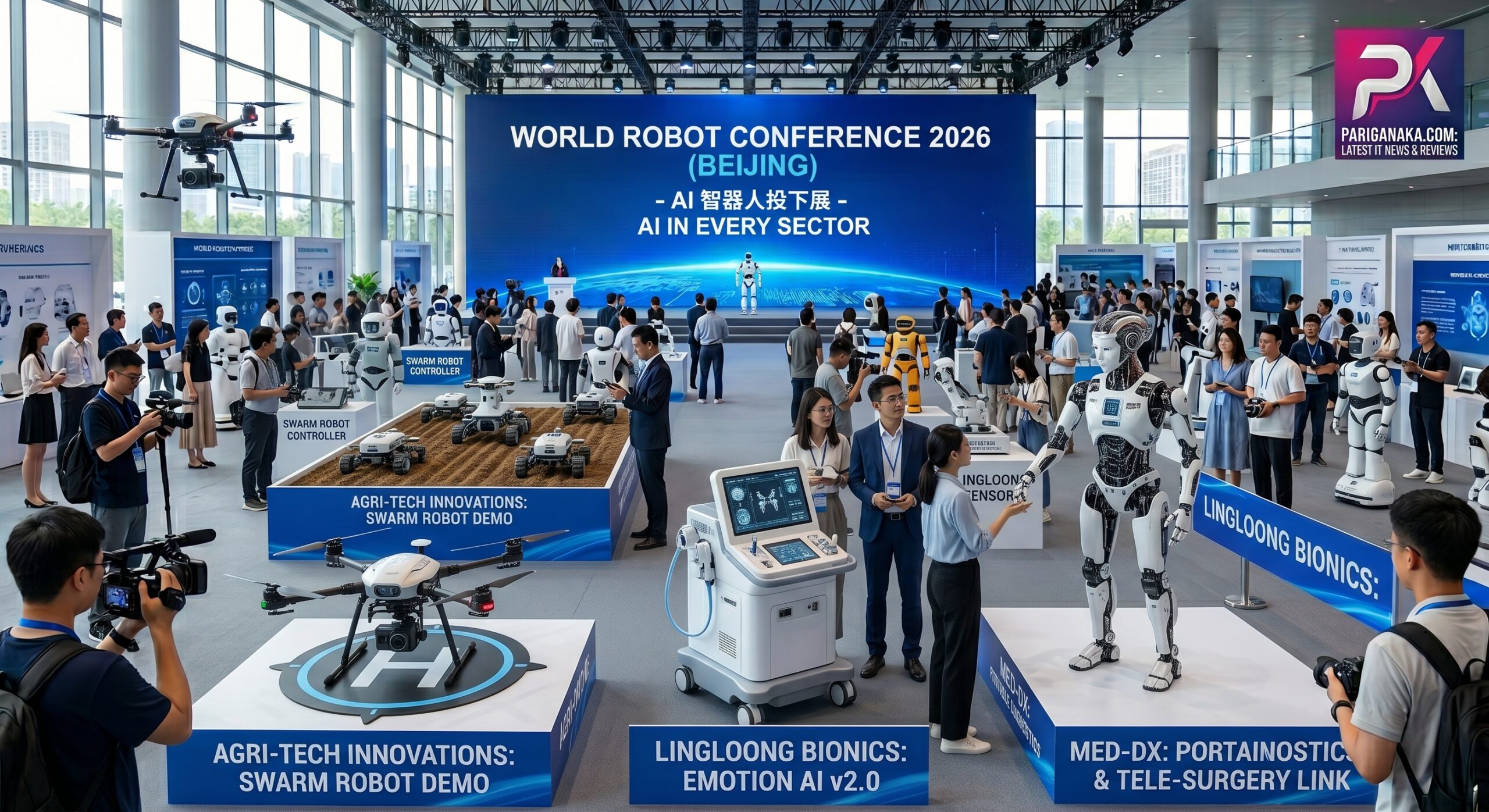
Artificial Intelligence is no longer confined to the digital realm of screens and cloud servers. If the recently concluded 2026 World Robot Conference (WRC) is any indication, the future of AI is undeniably physical. Here is a comprehensive look at the groundbreaking developments that are bringing humanoid robots out of the laboratory and into our daily lives.
Moving Toward Real-World Applications
The 2026 World Robot Conference, held in Beijing from August 19 to August 23, showcased the rapid development of China’s humanoid robot industry. The industry is making a definitive shift from small-batch production toward routine deployment and large-scale applications.
The numbers reflect massive market dominance. According to the 2026 Humanoid Robot Industry Development Report released at the event, China shipped more than 40,000 humanoid robots in the first half of 2026 alone. This accounts for an astonishing 97% of global shipments.
Key Humanoids Showcased at the 2026 WRC
Robots are increasingly taking on dangerous, heavy-duty, and highly complex tasks. The trend is reflected in a growing range of use cases. Some of the most notable robots showcased at the conference included:
- LINGLOONG v2.0: Described as the world’s first firefighting humanoid robot, it uses computer vision to locate fire sources. It can autonomously carry and operate a fire extinguisher to complete simulated firefighting tasks.
- Galbot Industrial Robots: Robotics company Galbot demonstrated machines capable of handling payloads of up to 50 kilograms for industrial depalletizing and palletizing. Their Galbot S1 model acts as a “24-hour worker” that can independently plan routes, avoid obstacles, and even replace its own batteries.
- UBTech U1 Pro: Focusing on social interaction, this ultra-bionic humanoid is equipped with an emotion-aware large language model, a complex facial muscle system, and eye-tracking technology. It is designed for mass production in areas like elderly companionship and emotional support.
The Future is Embodied Intelligence
As robots transition to everyday use in factories, pharmacies, and homes, we are witnessing a new era where artificial intelligence can physically interact with its environment. With continuous advancements in autonomous operating capabilities, AI is officially stepping off the screen and into the real world.
If a highly capable humanoid robot like the ones showcased at the WRC became commercially available for your home, what daily chore would you delegate to it first?
Leave a Reply