
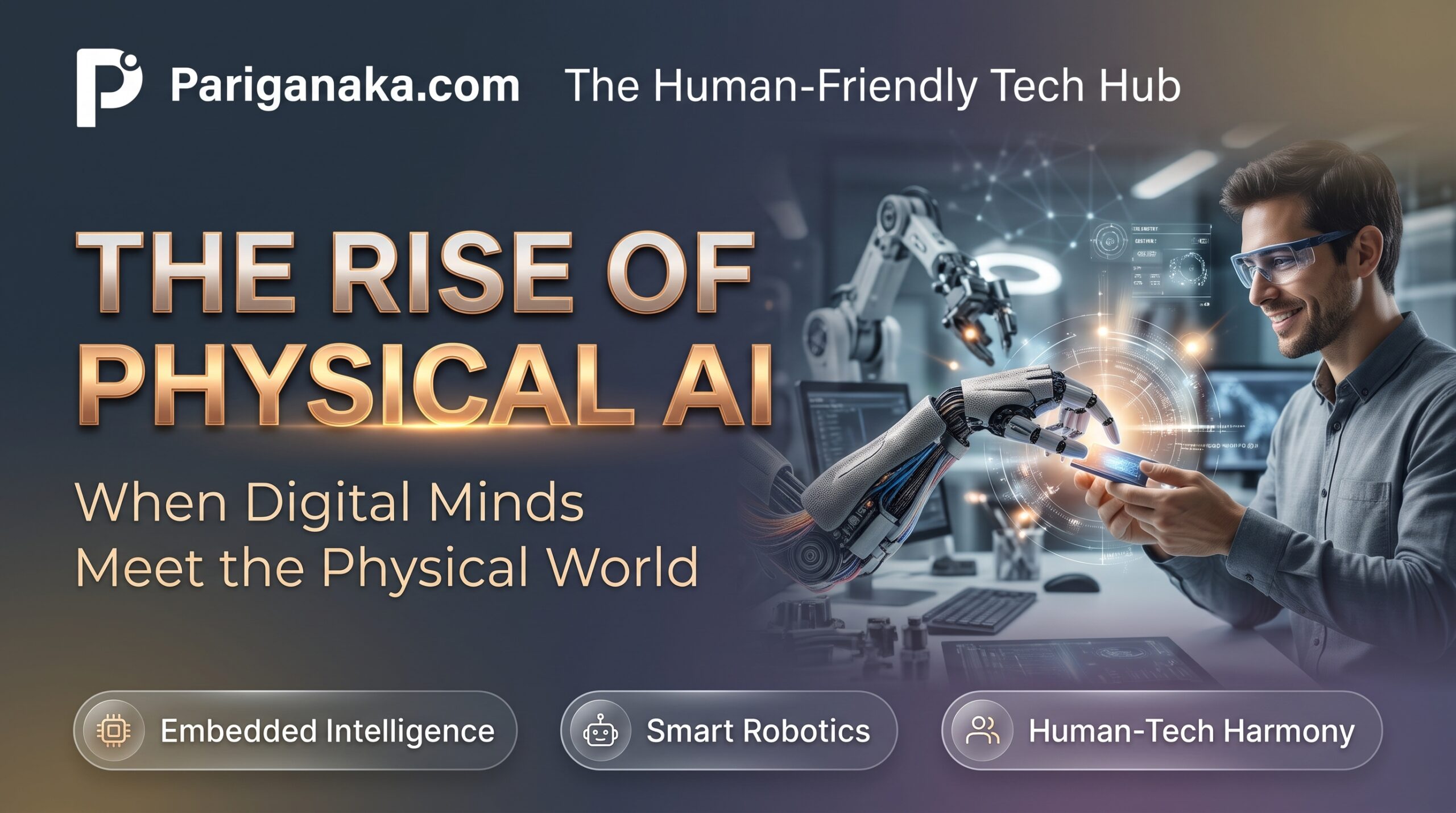
For the past few years, artificial intelligence has lived primarily behind our screens, generating text, analyzing data, and dreaming up images in a purely digital realm. But we have now entered a transformative era where AI is breaking out of the virtual world and stepping directly into the physical one. This is the era of Physical AI—the integration of advanced machine intelligence with physical systems, robotics, and sensors, allowing machines to understand, navigate, and actively interact with the real world.
Unlike traditional robotics, which relies on rigid, pre-programmed instructions, Physical AI uses “world models.” These systems are trained on massive datasets of video, physical interactions, and sensory inputs, giving them an intuitive grasp of how the physical world works. A robot powered by Physical AI doesn’t just move; it perceives, adapts, and learns on the fly, handling unpredictable environments with the kind of common sense once thought unique to humans.
Here’s how Physical AI is reshaping our world:
- Intelligent Collaboration & Robotics: From the warehouse floor to the healthcare ward, robots are no longer confined to safety cages. They are now working alongside humans as collaborative partners (cobots). In hospitals, they assist with patient care and deliver supplies, while in logistics, they hand over tools and goods safely and efficiently, adapting to human movements in real-time.
- Adaptive Manufacturing: In factories, Physical AI is transforming assembly lines. Machines can now inspect their own work, sense material variations, and adjust their grip or force accordingly. If a part is slightly out of place, the AI doesn’t stall; it recalculates, fixes the issue, and keeps the line moving.
- Smarter Autonomous Mobility: Autonomous vehicles, drones, and delivery robots are becoming truly aware of their surroundings. They can navigate complex, bustling city streets, predict pedestrian behavior, and operate safely in unpredictable weather conditions, making autonomous logistics and transit far more reliable.
- Human-Tech Harmony: True to its “human-friendly” potential, Physical AI is designed to enhance our capabilities, not just replace them. It takes over dangerous, physically demanding, and repetitive tasks, allowing human workers to focus on creative problem-solving, strategic decision-making, and high-value collaboration.
This shift presents a massive leap forward, but it also comes with hurdles. Integrating digital intelligence into massive physical machines requires immense compute power, highly responsive edge infrastructure, and rigorous safety standards. As regulators and engineers work together to ensure these systems are safe and dependable, one thing is certain: AI is no longer just a digital assistant. It has gained a physical form, and it’s here to help us build a smarter, safer, and more collaborative future.
Leave a Reply