
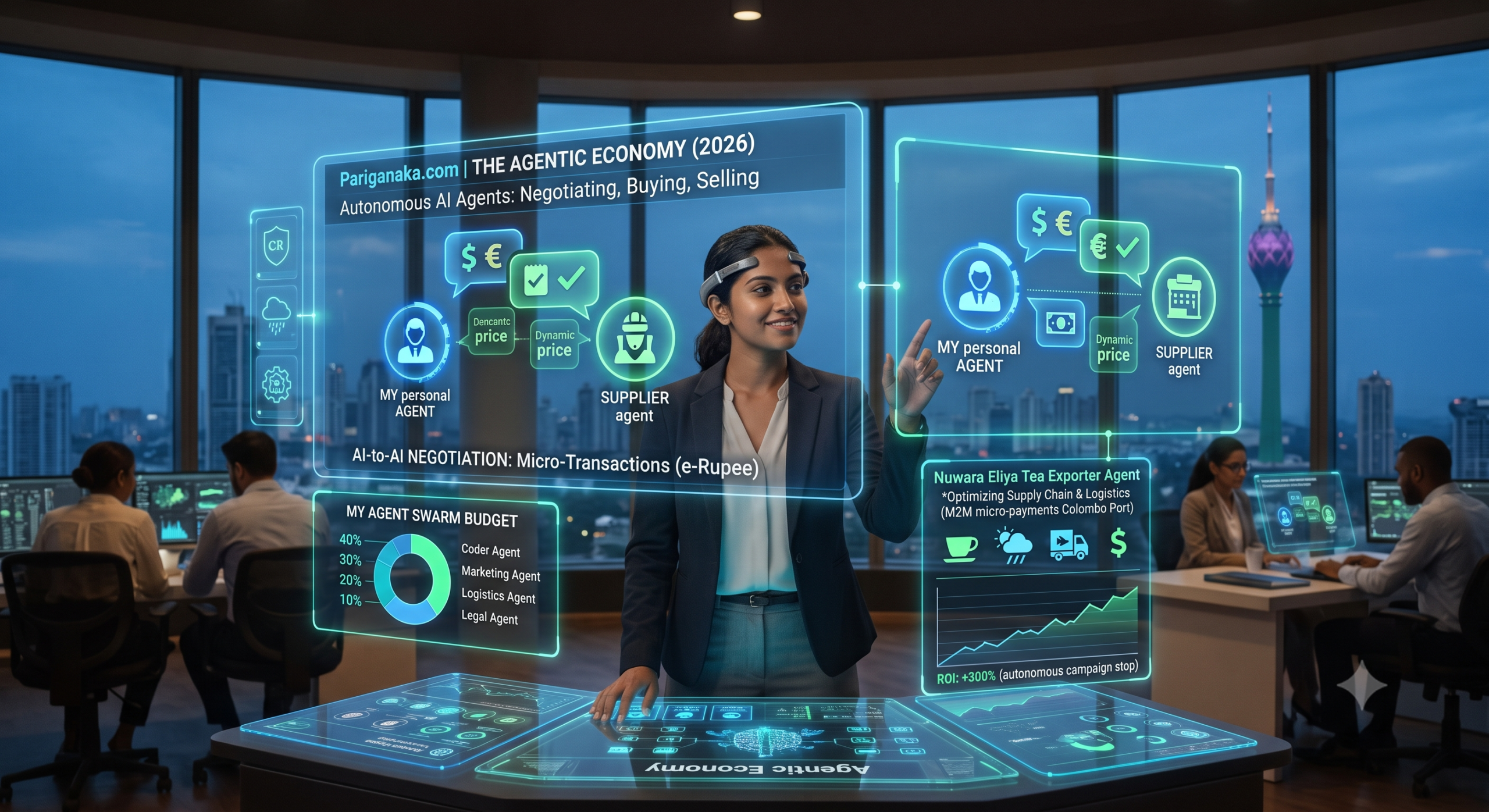
For the first half of the 2020s, Artificial Intelligence was essentially a hyper-advanced conversationalist. We typed prompts into a chatbox, and the AI generated text, code, or images for us to manually use. It was a digital assistant that waited for instructions. Today, in July 2026, that “prompt-and-wait” era feels like the Stone Age.
We have crossed the threshold from Generative AI to Agentic AI. The AI no longer just talks; it acts. It negotiates, schedules, buys, sells, and signs digital contracts on your behalf. We have entered the Agentic Economy, a world where non-human entities are the primary drivers of digital commerce.
For the readers of Pariganaka.com, here is a deep dive into how machine-to-machine (M2M) micro-transactions are reshaping global finance, and why humans are rapidly transitioning from “workers” to “managers of AI swarms.”
1. From “Generative” to “Agentic”: The Autonomous Doer
The fundamental shift over the last two years was giving AI access to the internet’s backend—APIs, digital wallets, and authenticated logins. We no longer ask AI how to do something; we give it a high-level goal and let it execute the steps autonomously.
- Goal-Oriented Execution: Instead of asking an AI to write a marketing email, you now tell your Personal AI Agent, “Launch a digital ad campaign for my new product, optimize the budget across social platforms, and stop when we hit a 300% ROI.” The agent autonomously writes the copy, generates the video assets, buys the ad space, monitors the analytics, and tweaks the strategy in real-time.
- Agent-to-Agent Negotiation: When you want to book a vacation, you don’t browse websites. Your AI Agent contacts the AI Agents of various airlines and hotels. In a matter of milliseconds, the agents negotiate prices, check your calendar, factor in your dietary preferences, and finalize the booking.
2. The Machine-to-Machine (M2M) Financial Grid
For AI agents to truly act on our behalf, they needed the ability to spend money. By 2025, the traditional banking system was forced to adapt, creating “Sub-Wallets” managed entirely by autonomous algorithms.
- The AI Allowance: You now allocate a monthly budget to your AI assistant. It uses this digital wallet to pay for your software subscriptions, order groceries when your smart fridge detects low inventory, and even micro-invest spare change into algorithmic trading pools while you sleep.
- Micro-Transaction Ecosystems: AI agents are constantly paying each other. If your agent needs to quickly render a 3D video, it might dynamically lease computing power from another user’s idle AI agent across the world, paying for it in fractions of a cent per second using decentralized blockchain ledgers.
3. The Sri Lankan Context: The “Solopreneur” Swarm
The Agentic Economy is completely rewriting the rules of offshore outsourcing and the gig economy, impacting Sri Lanka’s vibrant IT and freelance sectors in unprecedented ways.
- The “100-Person Company of One”: A single software developer or creative designer in Colombo is no longer just one person. They act as the “CEO” of a personalized AI swarm. A local startup founder can now employ a specialized AI coder, an AI accountant, and an AI legal reviewer. This allows Sri Lankan solopreneurs to take on massive global enterprise contracts that previously required a corporate team of fifty people.
- Autonomous Supply Chains: Local e-commerce and agriculture are being optimized by agents. A tea exporter in Nuwara Eliya now uses an AI agent that monitors global weather patterns, predicts shipping container shortages in the Colombo Port, and autonomously pre-books logistics and renegotiates shipping rates with international buyer agents—completely bypassing human middlemen.
Pariganaka.com’s Take: The Agentic Economy is the ultimate productivity multiplier, but it fundamentally redefines human labor. When AI can autonomously execute complex, multi-step workflows, the value of human “doing” drops to near zero. Instead, the most valuable human skill in 2026 is “orchestration”—the ability to curate, manage, and ethically guide swarms of autonomous agents. We are no longer the gears in the economic machine; we are the conductors of a digital orchestra. The question is: what happens to the billions of people who were trained merely to be gears?
Leave a Reply