
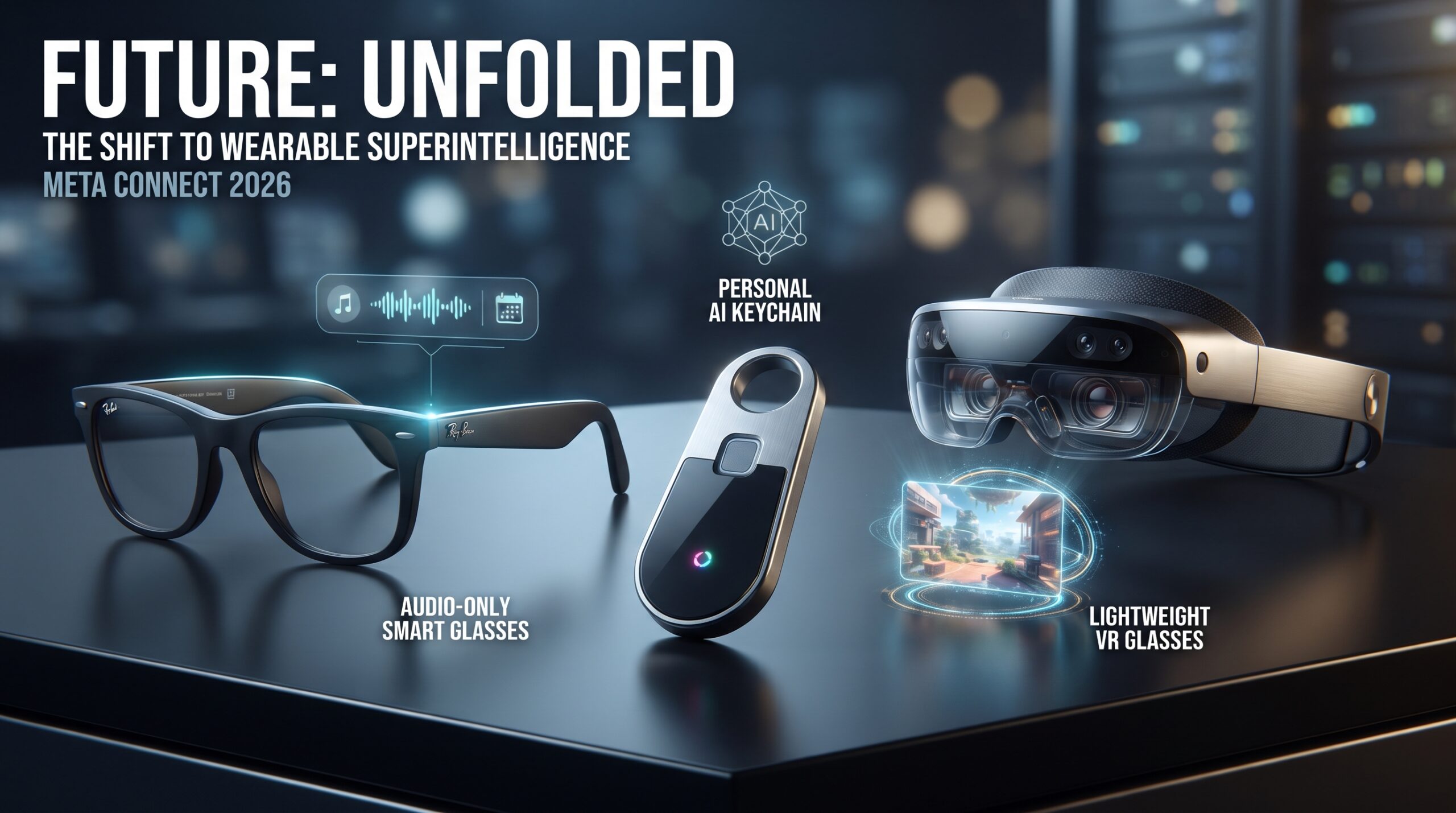
The technology landscape is undergoing a massive paradigm shift, moving rapidly away from pocket-sized smartphone screens toward ambient, wearable, and AI-first ecosystems. At the center of this movement is Meta’s recent showcase at Meta Connect 2026, which introduced a comprehensive lineup of hardware and software designed to integrate artificial intelligence deeply into everyday life.
1. Meet “Muse”: The Proactive Personal Agent
Rather than acting as a traditional chatbot that simply answers text prompts, Meta’s newly launched Muse functions as a full-scale personal agent. Powered by the Muse Spark model and secured via dedicated virtual machines (Muse Secure VMs), Muse is built to execute autonomous tasks such as booking travel, managing emails, handling purchases, and organizing workflows.
- E-Commerce & Ecosystem Integration: Meta has secured major retail and productivity partnerships—including Walmart, Best Buy, Sephora, Spotify, and GitHub—allowing Muse to interact natively with third-party applications and services.
- Computer Use Capabilities: Users can grant Muse permission to drive desktop applications, manage files, and execute background tasks independently.
2. A Diversified Eyewear Lineup: From Audio-Only to Spatial Computing
Meta expanded its smart eyewear ecosystem significantly, aiming to provide more than 100 style combinations by the end of the year.
- Ray-Ban Meta Audio (No Camera): Addressing privacy concerns and consumer preferences for lightweight design, Meta introduced its first camera-free audio glasses. Weighing just 43 grams, these glasses focus entirely on open-ear audio, phone calls, and interacting with Muse while offering up to 12 hours of battery life. They also introduce an FDA-cleared hearing enhancement feature for users experiencing mild-to-moderate hearing loss.
- Ray-Ban Meta Gen 3: Featuring upgraded audio capabilities, a 12MP camera, and a six-microphone array, the Gen 3 lineup introduces iconic frames like the Aviator and Zena, alongside designer collaborations.
- Meta VR Glasses: Moving away from bulky, traditional headsets, Meta unveiled its featherlight 100-gram spatial computing glasses. Equipped with 5K micro-OLED displays, Dolby Vision, and hand-gesture tracking, the device acts as a private cinema, a multi-monitor workstation, and a gaming console. It is scheduled to launch in spring 2027 for $1,299.
3. The “Muse Charm” AI Keychain
In a surprise hardware announcement, Meta previewed the Muse Charm—a pocket-sized, keychain-ready device designed to give users instant, hands-free access to the Muse AI assistant without requiring a phone or glasses. Featuring a corner fingerprint sensor for immediate voice activation, the device is slated for a holiday release in December.
As tech giants continue to push the boundaries of agentic AI and lightweight hardware, the boundary between the digital and physical worlds is blurring faster than ever.
Leave a Reply