
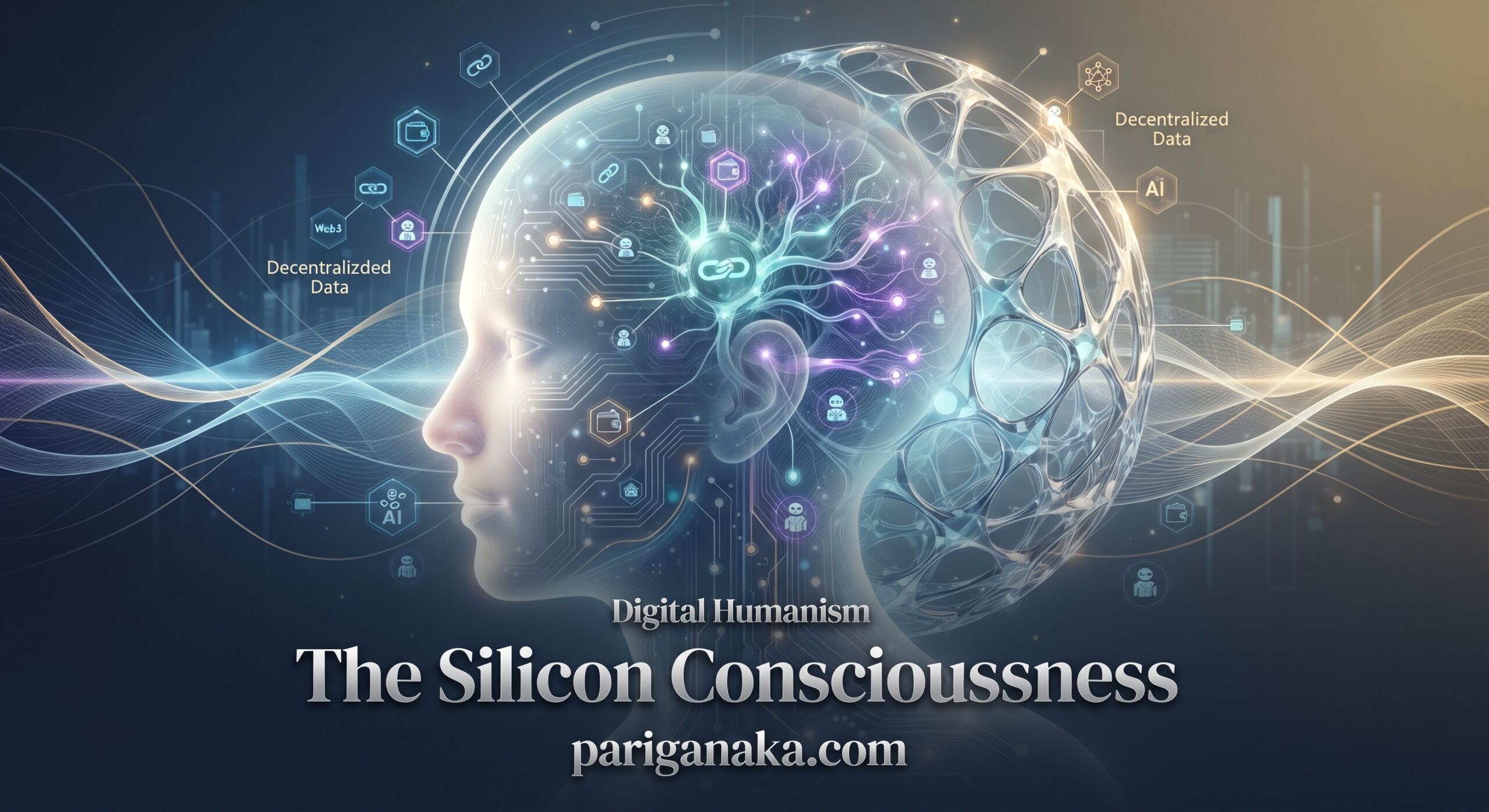
Introduction: The Convergence of Mind and Machine
As we navigate the technological landscape, the digital epoch is undergoing a profound paradigm shift. We have moved past the era of isolated digital tools and entered an age defined by hyper-connected systems. Agentic AI, decentralized Web3 protocols, and the burgeoning horizons of quantum computing are no longer speculative concepts—they form the active nervous system of modern digital society. Yet, as our computational capacity scales exponentially, a fundamental philosophical question demands our attention: How do we preserve human agency and consciousness within an increasingly automated matrix?
This article explores the framework of Digital Humanism—a perspective that refuses the false dichotomy between relentless technological acceleration and human alienation, proposing instead a synthesis reminiscent of the ancient Zorba the Buddha ideal: rooted fully in the physical, sensory reality of existence while harnessing the highest elevations of intellect and technology.
1. The Rise of Autonomous Agentic Architectures
Traditional software waited for explicit human prompts. Modern agentic systems, driven by advanced Neural Processing Units (NPUs) at the edge and private cloud models, anticipate, reason, and execute complex workflows independently. This transition shifts our role from operators to orchestrators.
Core Architectural Shift: Moving from reactive procedural automation to proactive, goal-directed agent ecosystems that prioritize data privacy, local sovereignty, and contextual understanding.
By shifting computational workloads closer to the user through localized NPUs, we reclaim a vital degree of data sovereignty. No longer must every thought, query, and interaction pass through centralized opaque servers; private cloud and edge computing empower individuals to maintain absolute ownership over their digital footprint.
2. Decentralized Sovereignty: Web3 and Identity
In parallel with artificial intelligence, decentralized networks redefine how we establish trust and ownership online. Traditional corporate silos monetize user identity and attention. Conversely, Web3 protocols and blockchain-anchored naming services enable true self-sovereign identity.
| Traditional Paradigm | Digital Humanist / Web3 Paradigm |
| Centralized Identity & Data Silos | Self-Sovereign Identity & Wallet-Based Auth |
| Algorithmic Attention Extraction | Intentional Digital Minimalism & Value Alignment |
| Opaque Cloud Infrastructure | Verifiable, Decentralized Edge Computing |
When individuals anchor their digital presence using decentralized naming standards and personal domain ecosystems (pariganaka.com and decentralized analogs), they reject rented digital real estate. They establish authentic, direct connections with their audience, unmediated by algorithmic gatekeepers.
3. The Silicon Soul: Balancing Tech and Consciousness
Technology without introspection leads to spiritual and psychological fragmentation. The true promise of the digital age is not merely higher throughput or faster processing speeds, but the creation of space for deeper mindfulness and intentional living. Digital minimalism is not about rejecting technology; it is about mastering our relationship with it.
As we design future systems, our guiding metric must be human flourishing. When code and consciousness harmonize, technology ceases to be an external distraction and becomes an amplifier of our highest human potential.
© 2026 Pariganaka.com • Published under independent digital strategy framework.
Leave a Reply