
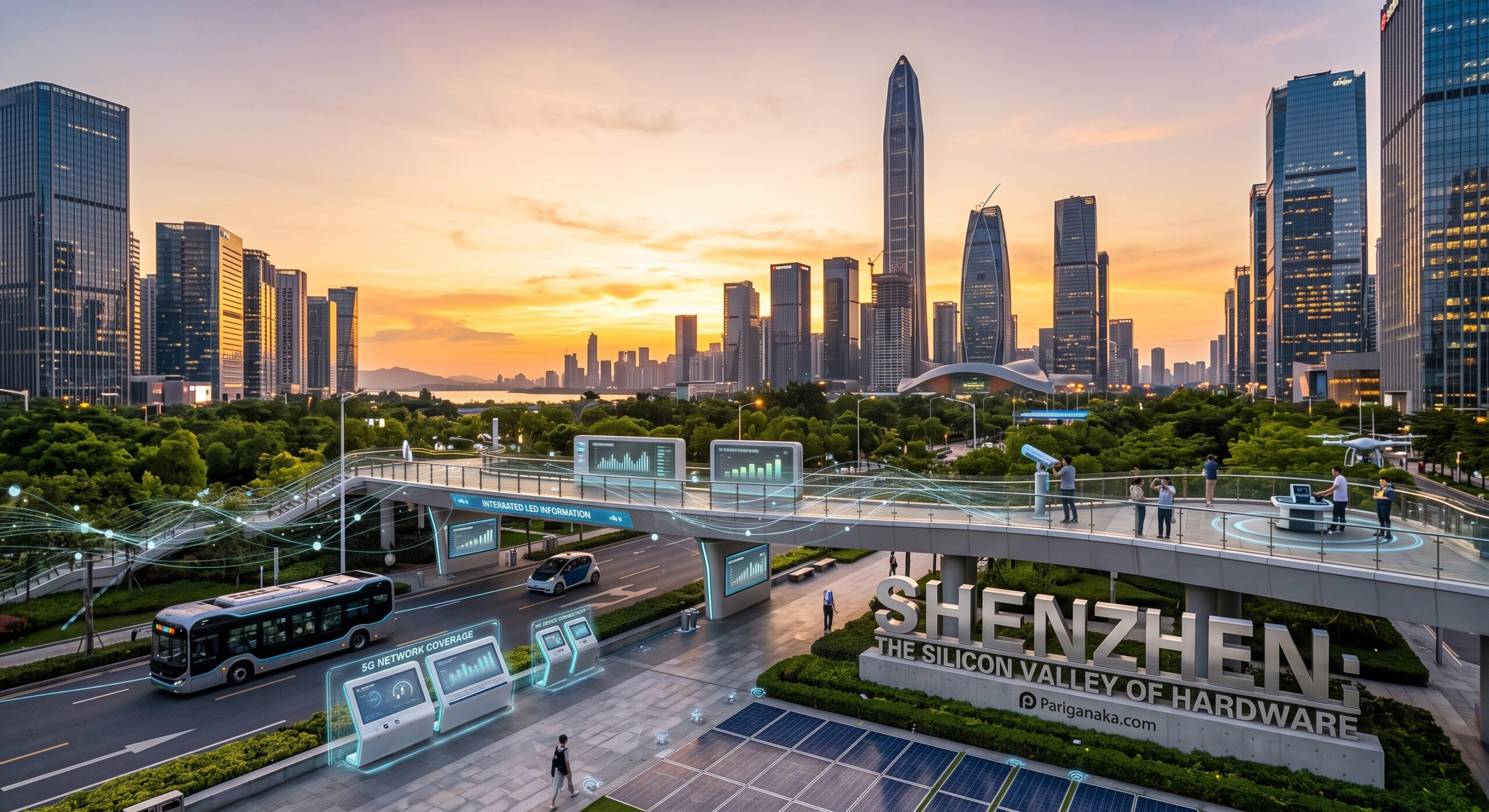
When we think of global technology hubs, Silicon Valley in California is usually the first place that comes to mind. However, over the past few decades, a former fishing village in China has quietly transformed into the beating heart of global tech manufacturing and innovation.
Today, Shenzhen is widely known as the “Silicon Valley of Hardware.” For tech enthusiasts, developers, and IT professionals following Pariganaka.com, understanding how this city operates provides a fascinating glimpse into the future of global technology.
The Undisputed Capital of Hardware
If you want to build a new smartphone, an IoT device, or a robotics prototype, there is no better place on earth than Shenzhen.
- The Huaqiangbei Market: This is the largest electronics market in the world. It is a massive, sprawling district where you can buy every imaginable electronic component—from microchips and sensors to LED screens and circuit boards—at incredibly low prices.
- Rapid Prototyping: In the US or Europe, taking a hardware idea from a blueprint to a working prototype can take months. In Shenzhen, thanks to the hyper-connected supply chain, it can often be done in just a few days.
Home to Global Tech Giants
Shenzhen is not just about assembling parts; it is the headquarters for some of the most influential technology companies in the world:
- Tencent: The creators of WeChat and the world’s largest video game vendor.
- Huawei & ZTE: Global pioneers in 5G technology and telecommunications infrastructure.
- DJI: The undisputed king of the commercial drone market, controlling over 70% of the global industry.
- BYD: One of the world’s leading manufacturers of electric vehicles (EVs) and advanced battery technologies.
A Living Testbed for Future Tech
Shenzhen doesn’t just manufacture the future; it lives in it. The city serves as a massive testing ground for next-generation urban technology.
- First to 5G: Shenzhen was the first city in the world to establish a fully independent, standalone 5G network covering the entire metropolitan area.
- 100% Electric Transit: To combat pollution, Shenzhen successfully transitioned its entire fleet of public buses and taxis to 100% electric power.
- AI and Automation: Autonomous delivery drones and robots are a common sight, seamlessly integrating AI into the daily lives of its citizens.
The Takeaway for Tech Professionals
For the IT community, Shenzhen proves that the future of technology is not just about writing software. The real magic happens when software meets hardware. Understanding how physical devices integrate with code—through concepts like the Internet of Things (IoT)—is becoming an essential skill for the next generation of tech creators.
Leave a Reply