
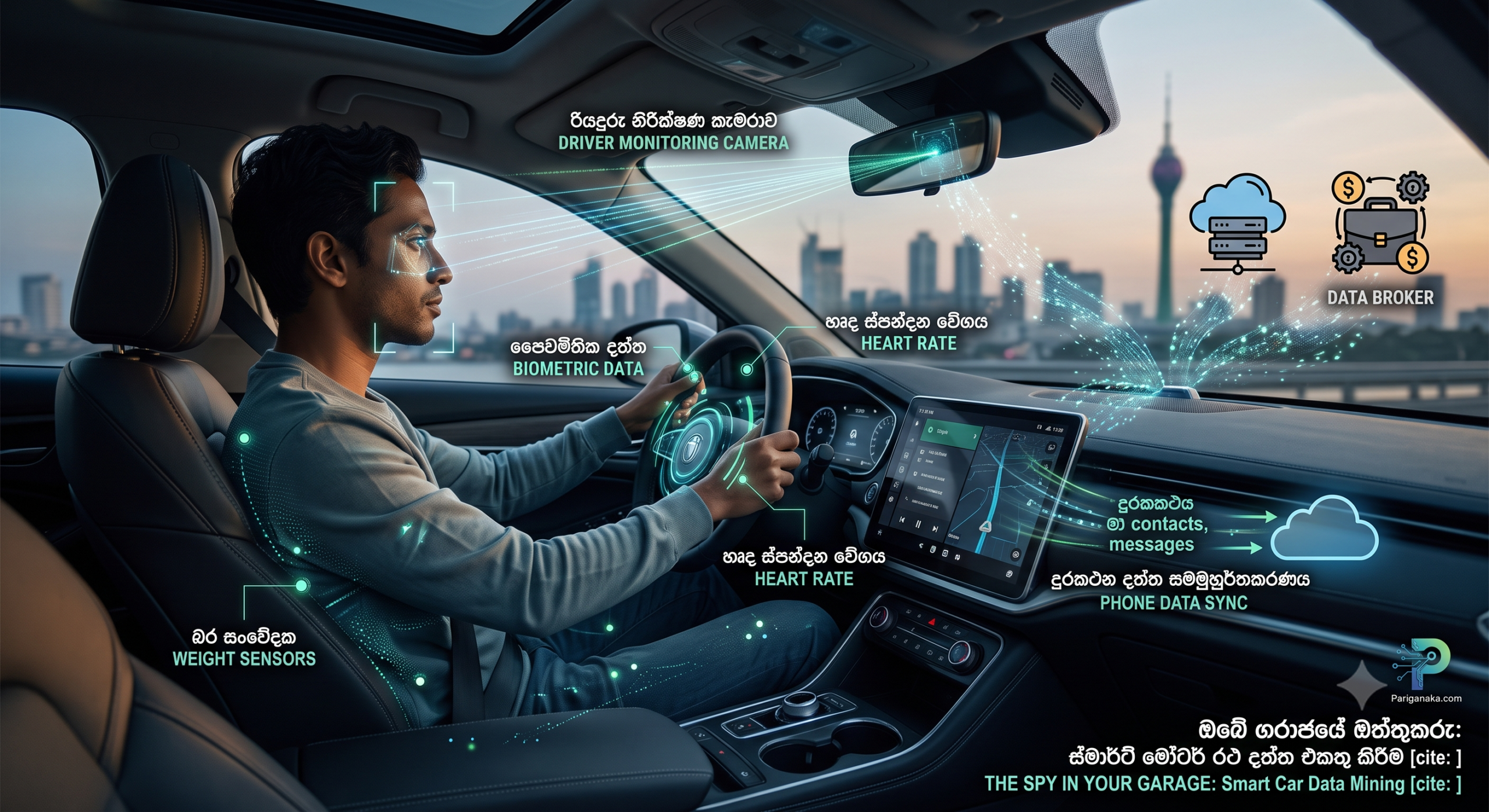
When you buy a new car today, you aren’t just buying an engine and four wheels; you are buying a massive computer that happens to drive. In 2026, smart cars and Electric Vehicles (EVs) are loaded with internet-connected sensors, cabin cameras, and constantly syncing companion apps.
While features like remote start and self-parking are incredibly convenient, they come at a hidden cost. Your vehicle is watching you, recording your habits, and often selling that data to the highest bidder. Here at Pariganaka.com, we are popping the hood on Smart Car Data Mining to show you exactly what your car knows about you and how to hit the brakes on digital surveillance.
1. What Exactly is Your Car Recording?
Modern vehicles collect more personal data than smartphones and smart home devices combined. Because a car is a physical machine you sit inside, it can monitor things your phone cannot.
- The Cabin Cameras: Many modern cars feature driver-facing cameras designed to monitor your eyes to ensure you aren’t falling asleep. However, these cameras also capture the faces of your passengers and your emotional reactions while driving.
- The Weight Sensors: The sensors in your seats don’t just detect if you need to put on a seatbelt; they track your exact weight and the weight of your passengers over time.
- The Digital Footprint: Every time you connect your phone to the car via Bluetooth or a USB cable to play music, the car instantly downloads your contact list, text messages, and recent call logs.
2. Who is Buying Your Driving Data?
Automakers are no longer just making money from selling cars or parts; they are becoming massive data brokers.
- Insurance Companies: This is the biggest threat to your wallet. Automakers quietly package your driving habits (how hard you brake, how fast you accelerate, and if you drive late at night) and sell this telemetry data to insurance providers. Many drivers in 2026 have seen their insurance premiums mysteriously skyrocket, entirely unaware their own car reported them for speeding.
- Targeted Advertisers: Because your car’s GPS knows exactly where you work, where you buy groceries, and where you drop your kids off at school, data brokers use this location history to build a highly accurate profile of your income level and lifestyle to serve you hyper-targeted ads on your phone.
3. Smart Ways to Protect Your Automotive Privacy
You don’t need to go back to driving a 20-year-old vehicle to maintain your privacy. You just need to take control of your car’s digital settings.
- Decline the “Optional” Terms: When you first set up your car’s companion app, you will be hit with pages of Terms and Conditions. Look carefully for checkboxes regarding “Data Sharing,” “Product Improvement,” or “Third-Party Telematics.” Always opt out of these. Your car will still drive perfectly fine without them.
- Wipe Your Data Before Selling: If you rent a car or sell your current smart car, never leave your data behind. Dig into the dashboard settings and perform a full “Factory Reset” to wipe your home address, synced contacts, and garage door codes from the system.
- Revoke App Permissions: Go to your smartphone’s settings and find your car’s companion app. Revoke its access to your phone’s microphone, camera, and contacts. It only needs Bluetooth or Wi-Fi to function properly.
Quick Comparison: Old Tech vs. Smart Cars
| Feature | Pre-2015 Vehicles 📉 | 2026 Smart Cars 📈 |
| Location Tracking | None (unless a physical GPS tracker is attached) | Constant live tracking synced to the cloud |
| Driver Monitoring | Basic seatbelt weight sensors | Eye-tracking cameras and biometric profiling |
| Data Privacy | You own your driving habits | Automakers harvest and sell your telemetry |
The Bottom Line:
Your car should take you from point A to point B, not take your personal data to data brokers. Treat your new smart car with the same digital suspicion you would a new social media app. By spending a few minutes deep in your dashboard settings turning off data-sharing features, you can reclaim your privacy on the road.
Keep your digital life secure behind the wheel, and stay tuned to Pariganaka.com for more essential tech survival guides!
Leave a Reply