
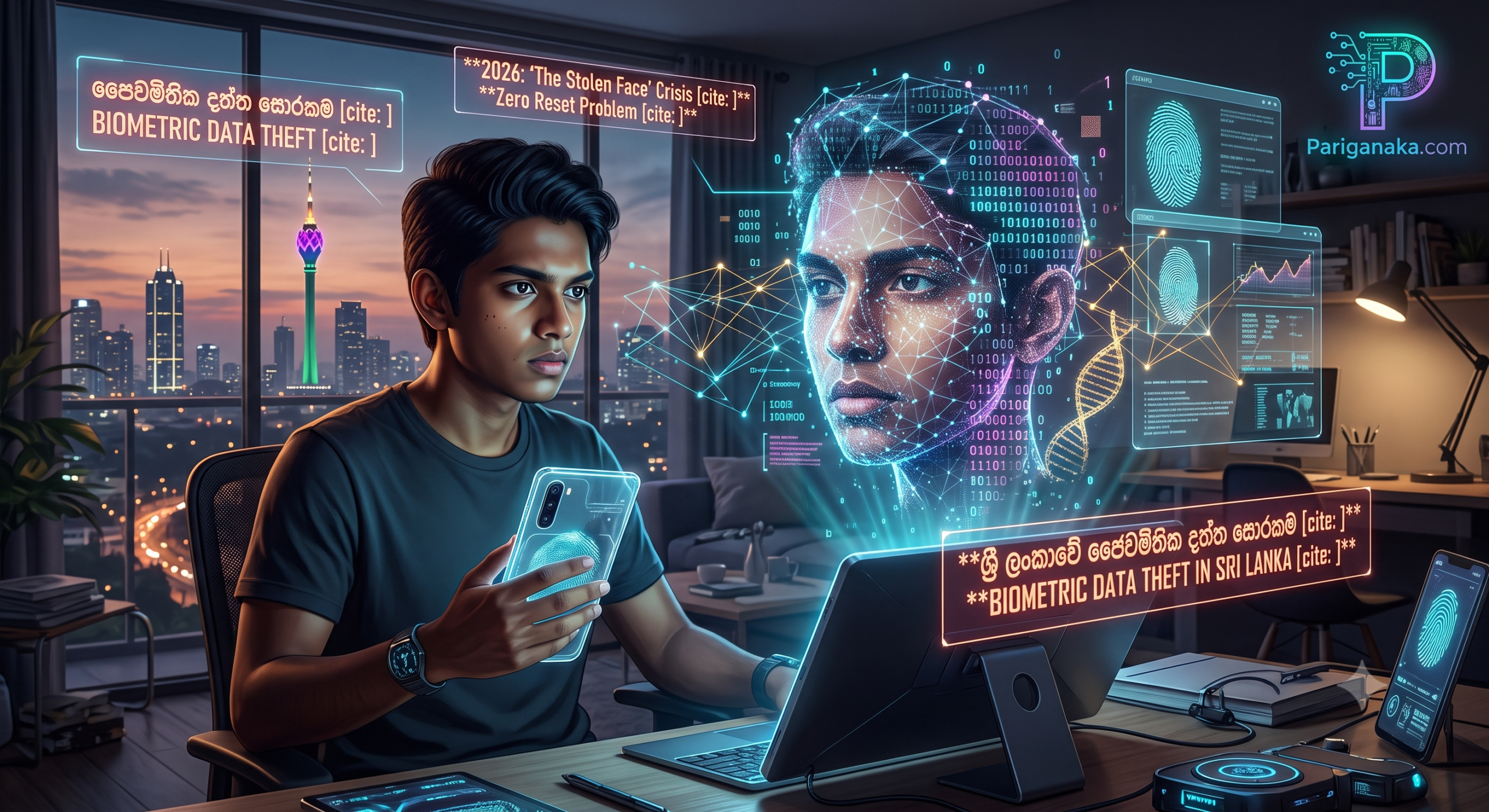
Think about how many times you typed a password today. If you are like most people in 2026, the answer is probably zero. You look at your phone to unlock it, you press your thumb on your smart door lock to enter your house, and you use face recognition to authorize bank transfers.
Biometrics (using your physical traits as a password) feel incredibly secure and futuristic. But there is a massive, terrifying flaw built into this system. If a hacker steals your banking PIN, you simply log in and change it. But what do you do if a hacker steals your fingerprint or your face?
Here at Pariganaka.com, we are exploring the rise of Biometric Data Theft and how cybercriminals are exploiting the one password you can never, ever change.
1. How Do Hackers Steal Your Biology?
You might think your fingerprints and facial scans are safely locked inside your devices, but your biological data is often floating around in poorly secured databases.
- The Smart Lock Server Breach: Many cheap, generic smart door locks require you to upload your fingerprint to their cloud servers so you can “manage access remotely.” When these third-tier servers get hacked, cybercriminals download thousands of raw fingerprint files.
- High-Resolution Skimming: In 2026, smartphone cameras are so advanced that a hacker can extract a perfect replica of your fingerprint from a high-resolution photo of you holding a glass of water or throwing a peace sign on social media.
- Facial Depth Mapping: Using public videos from your TikTok or Instagram, AI software can now reconstruct a highly accurate 3D mesh of your face, which is then used to bypass facial recognition scanners on poorly protected crypto wallets and apps.
2. The Nightmare of a Permanent Hack
The real danger of biometric theft isn’t just the initial breach; it is the fact that the damage is permanent.
- The “Zero Reset” Problem: You cannot issue yourself a new fingerprint, and you cannot easily change your facial structure. Once your biometric data is sold on the dark web, it is compromised for the rest of your life.
- Synthetic Identity Fraud: Hackers combine your stolen face, your leaked National Identity Card (NIC) details, and AI voice cloning to create a perfect “Synthetic Identity.” They can open bank accounts, take out massive loans, or register shell companies entirely in your name, passing every automated security check.
3. Smart Ways to Protect Your Biological Passwords
You don’t need to stop using Face ID or fingerprint scanners, but you must start treating them as a convenience rather than an absolute security measure.
- Demand Local Storage Only: Before buying a smart phone, laptop, or smart lock, ensure the manufacturer uses Local Secure Storage (like Apple’s Secure Enclave or Samsung’s Knox vault). This means your fingerprint never leaves the physical device and is never uploaded to the cloud.
- Do Not Use Biometrics for Your Life Savings: For unlocking your phone to check WhatsApp, Face ID is fine. But for accessing your primary bank account or crypto wallet, disable biometric login. Rely on a complex, typed password or a physical security key (like a YubiKey).
- Use the “Turn Off” Shortcut in Emergencies: Both iOS and Android have quick shortcuts to instantly disable biometric unlocking in an emergency (like pressing the power button 5 times). Learn this shortcut so nobody can force you to unlock your phone by holding it to your face.
Security Rule of Thumb: Biometrics should be your username, not your password. They are great for proving who you are, but for sensitive data, they should always be combined with something only you know (a PIN) or something you have (a physical token).
Quick Guide: Passwords vs. Biometrics
| Feature | Traditional Passwords ⌨️ | Biometric Logins 👁️ |
| Convenience | Low (Hard to remember, slow to type) | High (Instant, frictionless) |
| Reset Ability | Instant (Can be changed endlessly) | Zero (Cannot change your physical body) |
| Theft Method | Phishing links, Keyloggers, Data breaches | Server hacks, High-res photos, 3D mapping |
| Best Used For | Bank accounts, Main email, Crypto wallets | Unlocking screens, low-risk apps |
The Bottom Line:
Your face and your fingerprints are the most personal data you own. As the world pushes for a passwordless future, we must remember that convenience always comes at the cost of security. By keeping your most sensitive accounts protected by a traditional PIN and ensuring your devices store your biological data locally, you can safely navigate the biometric age without giving away the keys to your identity.
Protect your digital DNA, and stay tuned to Pariganaka.com for more modern tech survival guides!
Leave a Reply