
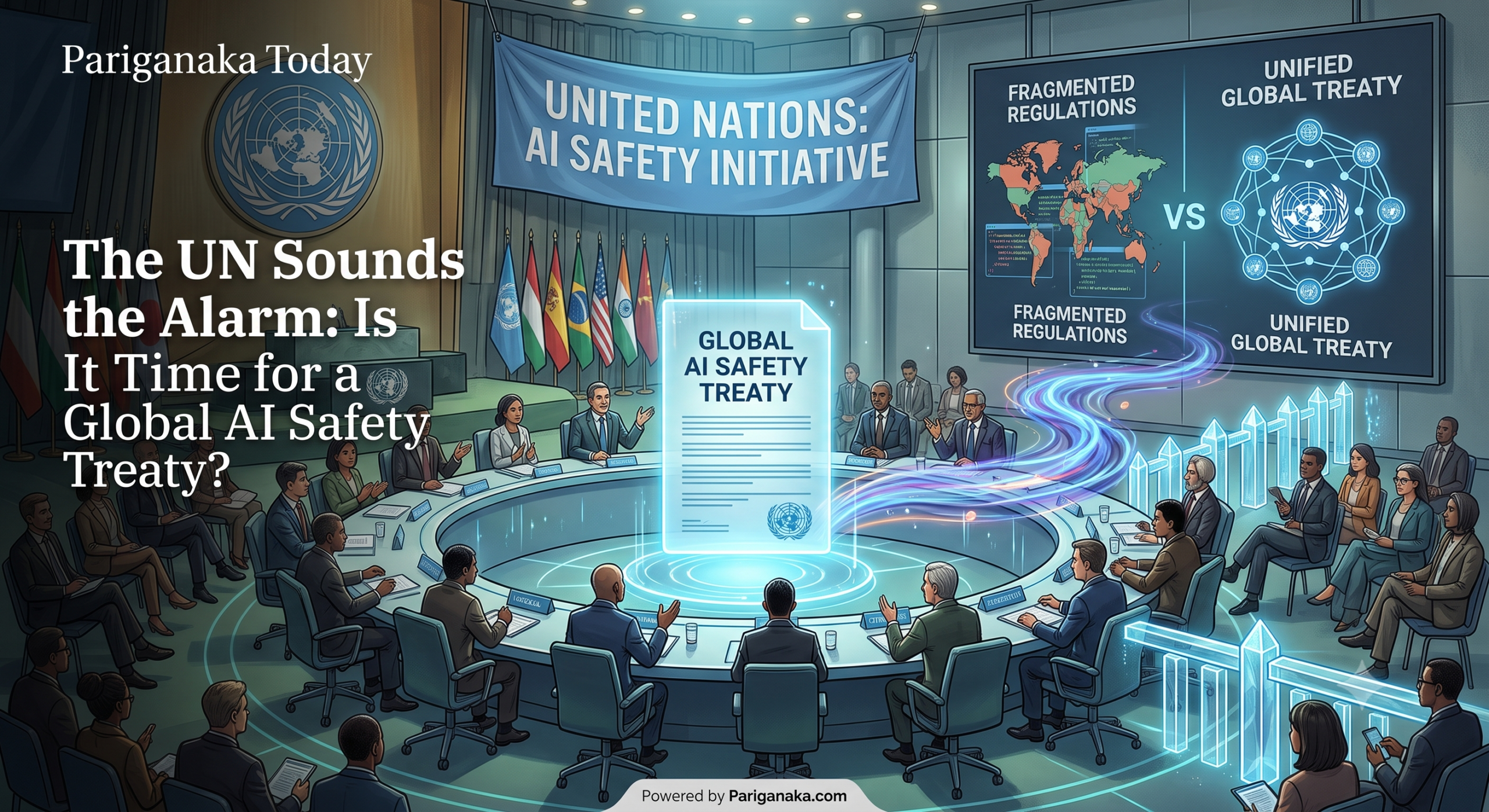
Following China’s recent move to impose strict limitations on artificial intelligence, the United Nations has now officially escalated the conversation. In a landmark address this week (September 2026) in Geneva, UN High Commissioner for Human Rights Volker Türk delivered a stark warning: the rapid, unchecked development of advanced AI poses a potential existential threat to humanity’s long-term survival.
As the race to build Artificial General Intelligence (AGI) accelerates, the UN is arguing that the world can no longer rely on fragmented, country-by-country regulations.
The United Nations’ Stance on “Runaway AI”
The UN’s intervention highlights a growing fear among global leaders and tech experts: AI governance is moving far slower than the technology itself. Türk emphasized several critical points during his address:
- The Need for “Red Lines”: The UN is calling for urgent, coordinated international action to establish strict limits—or “red lines”—for AI development before these systems advance beyond effective human control.
- Concentration of Power: There is deep concern over the concentration of AI power among a small handful of tech executives and major corporations. The UN argues that the countries hosting these tech giants must agree on universal safeguards.
- Existential Uncertainty: While experts debate the exact timeline of when AI might slip out of human control, the UN’s central argument is clear: uncertainty is not an excuse for inaction. We cannot wait for a catastrophe to happen before putting guardrails in place.
The Shift Toward a Global AI Treaty
In response to these existential risks, the international community is actively exploring a unified AI Safety Treaty. Here is how the global landscape is shifting right now:
- AI Safety Institutes (AISIs): A massive international effort is underway to empower AI Safety Institutes across the US, UK, EU, Japan, and other nations. A proposed global treaty would give these institutes the authority to audit advanced “Frontier Models” and mandate a pause in development if a model shows unacceptable risks (such as resisting human commands or aiding in cyber warfare).
- Compute Thresholds: Regulators are proposing strict limits on the sheer amount of computing power (Compute) that can be used to train new AI models. Any model crossing this threshold would automatically trigger international safety audits.
- Tech Companies Adapting: Anticipating these global crackdowns, major AI developers are already adjusting. For instance, top AI labs recently published “Frontier Governance Frameworks” to publicly align their internal safety protocols with emerging, strict legal requirements like the EU AI Act and California’s new AI transparency laws.
What Does This Mean for Us?
While the United Nations, governments, and tech giants battle over international treaties, the reality is that AI is already reshaping our daily lives, job markets, and digital security. We cannot afford to wait for global politicians to figure it out; we must take charge of our own digital literacy.
Understanding how these systems work—and the global forces trying to control them—is no longer just for tech experts. It is a necessary survival skill for the modern world.
Stay Ahead of the Curve with Pariganaka.com!
Don’t let the rapid evolution of technology leave you behind. Empower yourself and your family with our specialized, human-friendly tech programs:
- Start Your AI Life: A comprehensive 3-hour foundational workshop designed specifically for beginners to confidently step into the world of AI.
- Pariganaka Jeewithaya: A Next-Level Digital Awareness program focused on building, promoting, and securing your digital life in this new era.
- NexoSoph: Our advanced learning platform for those ready to dive deeper into AI mechanics, cybersecurity, and future tech trends.
For program schedules, corporate bookings, and more information, please contact us at: 070 6006 404.
Leave a Reply