
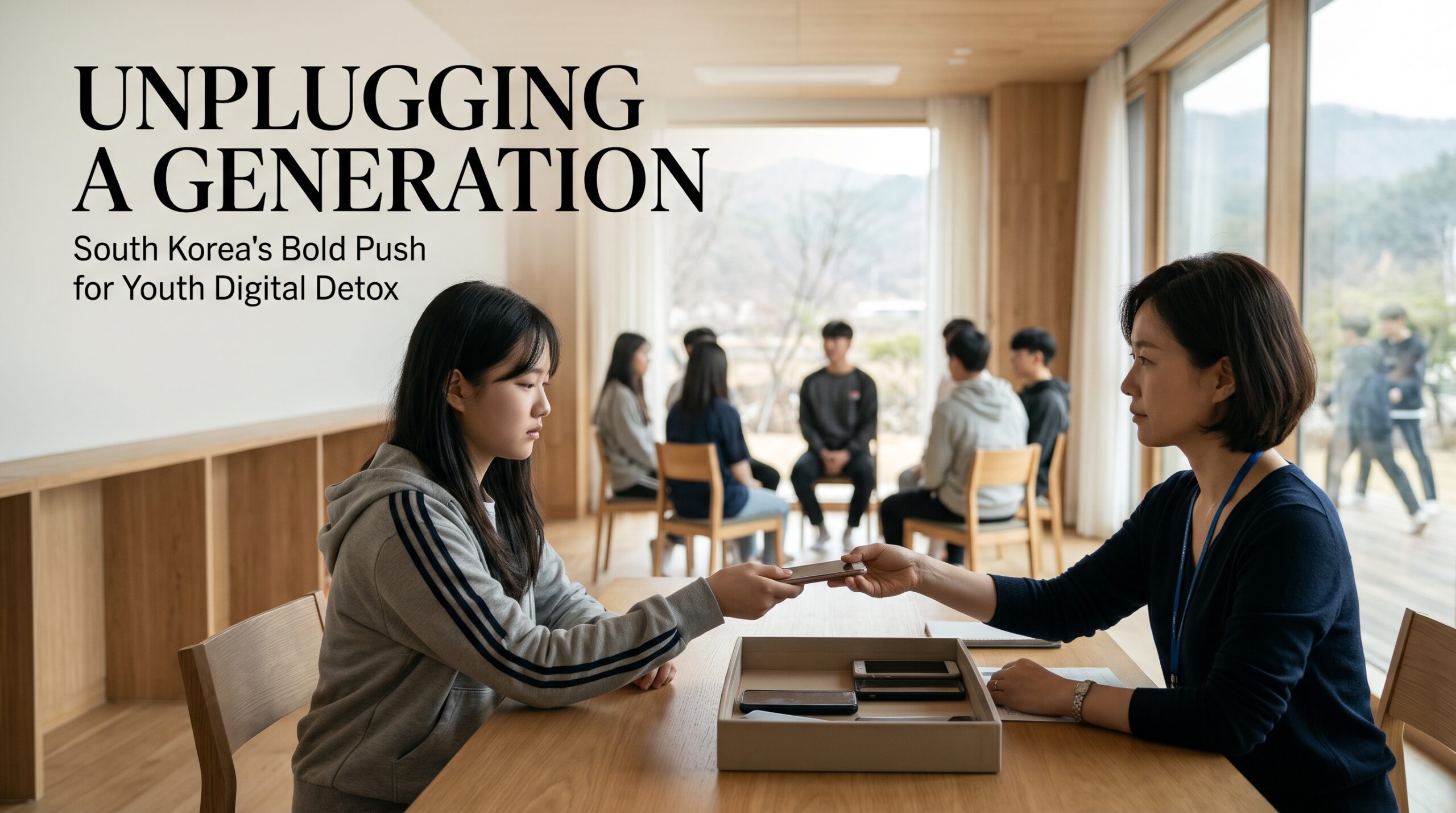
South Korea is taking decisive action to combat a growing national crisis: widespread screen and smartphone addiction among its youth. With high school students spending an average of six hours a day on their devices, the government and educational institutions are implementing strict measures, ranging from classroom bans to immersive rehabilitation centers, to help teenagers reclaim their offline lives.
The Classroom Smartphone Ban In response to a new law introduced this year, South Korean high schools now have the authority to completely ban smartphone use on school premises. At participating schools, the rules are uncompromising. Students are required to turn off their mobile devices and hand them in before morning registration, placing them into numbered pouches that are locked away in a teacher’s room for the duration of the school day.
While initially met with hesitation, the ban has yielded significant benefits:
- Improved Concentration: Students report that the absence of digital distractions makes it significantly easier to focus on lessons and absorb information.
- Better Engagement: Without the lure of screens, classroom participation and direct interactions with teachers have noticeably increased.
- Reduced Conflict: Teachers note a drastic drop in disciplinary issues over unauthorized phone use, as the formal prohibition leaves little room for argument.
Government-Funded Detox Centers The scale of the problem is alarming. A recent government survey revealed that 43% of adolescents aged 10 to 19—and over 25% of children aged 3 to 9—are at high risk for smartphone and tablet addiction. Recognizing this as a societal issue rather than just an individual failing, the South Korean government has funded a specialized screen detox center south of Seoul.
At this facility, teenagers voluntarily surrender their devices to participate in intensive eight-day rehabilitation programs. The curriculum involves:
- Digital Fasting: Complete separation from all screens and devices to break the immediate habit loop.
- Rehabilitation Workshops: Group activities and sports designed to help students overcome their dependency and rebuild offline social skills.
- Parental Support: Parents attend half-day sessions to learn how to actively support their children’s transition and manage household frustrations.
Legislative Action on Social Media With approximately 70% of teenagers using their phones primarily for social media, gaming, and videos, lawmakers are pushing for broader structural regulations. Rather than imposing a complete, outright ban that could infringe on freedom of expression and information, the National Assembly is debating a more measured bill. The proposed legislation focuses on regulating the algorithms that feed tailored content to users under 19, while also requiring explicit parental consent for children under 14 to open social media accounts.
Despite these sweeping national efforts and broad support from parents and educators, the core demographic remains skeptical. Recent polling indicates that just over half of all South Korean teenagers still oppose any attempts to curtail their smartphone usage.
Leave a Reply