
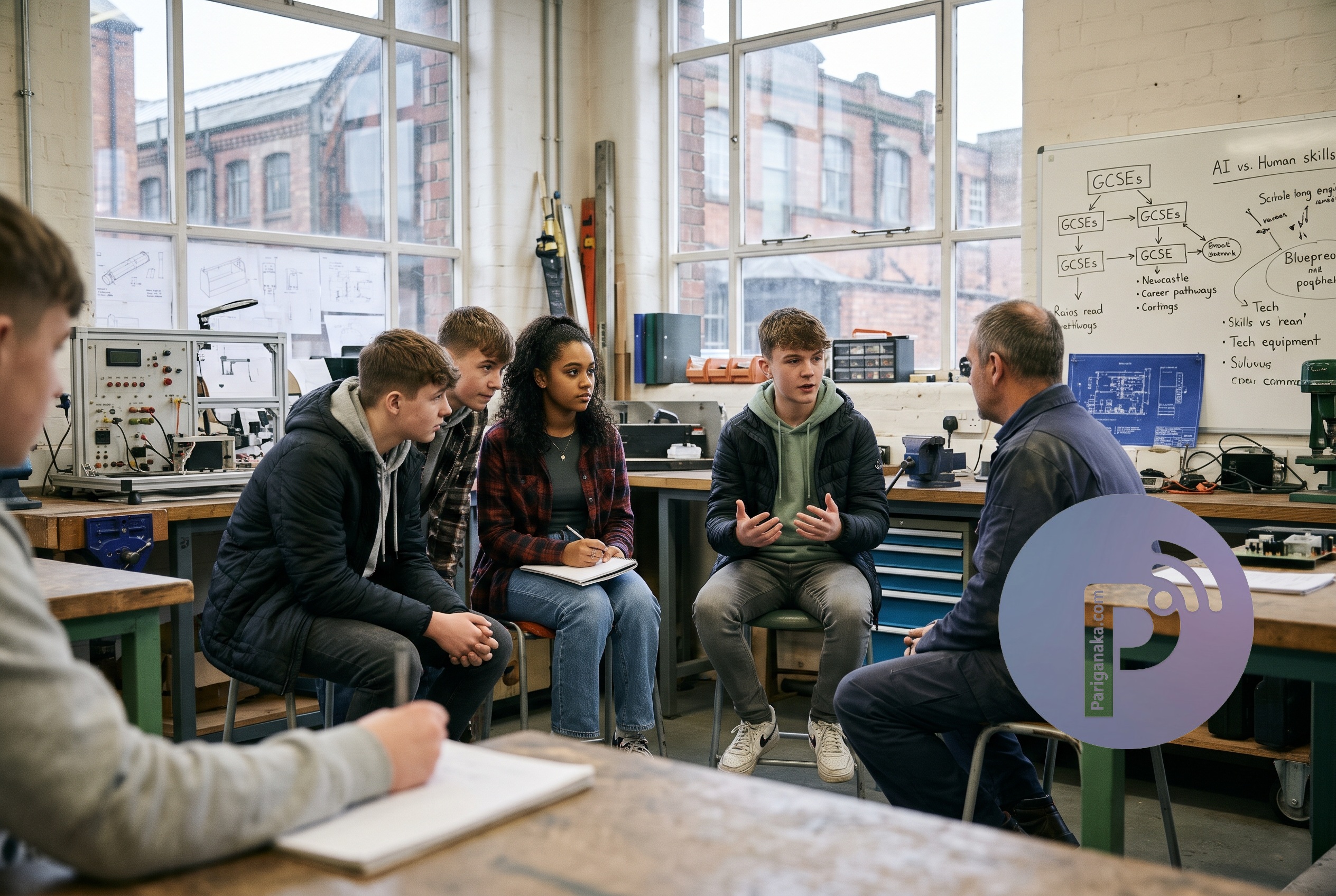
For teenagers approaching the end of their high school years, the future has never seemed more complex. Between looming GCSE exams, the pressure to secure a stable career, and the rapidly shifting landscape shaped by Artificial Intelligence (AI), the transition to the workforce is a daunting prospect. A recent BBC News report explored these very issues, sitting down with British teenagers from Newcastle to get a first-hand account of their hopes and fears.
Here is what they had to say about grades, the modern workplace, and what they believe schools should be doing differently.
The Weight of Exams and “The Wrong Decision”
The anxiety surrounding exams is palpable among teenagers. Students like Jasmine, McKenzie, and Javaris, who are in their final year of GCSEs, expressed significant stress about their academic performance. For many, there is a lingering fear that one bad grade could derail their entire future.
- “I’ve had… stressed periods where I’ve just thought work is so scary when you’re younger, ’cause it’s like if you make the wrong decision, what is the way?” one student shared.
- They noted the snowball effect of anxiety: not getting the right grade leads to missing out on the desired course, which leads to missing out on university.
However, getting exposure to real-life professionals helped ease some of this pressure. Speaking to adults who have navigated the ups and downs of the job market helped the teens realize that failing a single exam does not mean “your life is over,” and that successful futures don’t always require top-tier “grade nine” marks.
The AI Factor: Job Security in a Digital Age
Unsurprisingly, the rise of Artificial Intelligence is a major talking point among Gen Z. While some students are optimistic about the opportunities it presents, others voiced concerns about how AI will impact job availability and competition.
When the teenagers had the opportunity to question business leaders about AI, the response was clear: AI is here to stay, and understanding it is a crucial advantage.
- One executive emphasized that businesses are actively encouraging AI training and applications.
- He shared a poignant piece of advice from a senior leader: “They don’t fear losing their job to AI, but they fear losing their job to somebody who knows AI better.”
Bridging the Gap: What Schools Should Be Teaching
One of the most striking takeaways from the students was their belief that the traditional academic curriculum isn’t fully preparing them for adulthood. While they acknowledge the importance of their studies, they are calling for practical, real-world skills to be integrated into their education.
The teens identified several key areas where they feel underprepared:
- Social and Communication Skills: Having grown up in a highly digital age, teens recognize that interacting in a professional, face-to-face environment can be challenging. One student pointed out, “You can have the best grades, but if you don’t know how to talk to an employer in a professional way, they’re not going to really be looking for you.”
- Financial Literacy: Students expressed a strong desire to learn about taxes, mortgages, and general financial management before they are thrust into the real world.
- AI Education: The teens agreed that learning how to work alongside AI should become a staple of the modern school curriculum.
- Mandatory Work Experience: Experiencing a 9-to-5 environment firsthand was eye-opening for the students. Many felt that work experience should be mandatory so young people understand what they are actually getting into before committing to a career path.
Advice for the Next Generation
During their work experience, the students received a surprise visit from former contestants of the reality show The Traitors, who offered advice on navigating the job market.
The biggest takeaways for securing opportunities included:
- Be Bold: Instead of just sending an email or reaching out on Instagram, find the courage to walk into a business in person to ask for work experience.
- Embrace Rejection: Applying for jobs often means facing dozens of rejections or hearing nothing back at all. The key is to not get disheartened and to use a “no” to your advantage by asking for feedback on where you went wrong.
Ultimately, while the future remains uncertain, gaining real-world exposure left the teens feeling noticeably more positive and prepared to face the working world.
Sources:[1] BBC News, “What British teenagers really think about their futures” (Oct 20, 2026)
Leave a Reply