
In September 2016, as the tech world celebrated Google DeepMind’s AlphaGo defeating world champion Lee Sedol, Yuval Noah Harari published his monumental book Homo Deus. The renowned historian wrote a 500-page warning about the future of artificial intelligence, predicting an inevitable transfer of authority from humanity to algorithms.
A decade later, as we navigate 2026, many of Harari’s boldest predictions have come true with chilling accuracy. Yet, as a new retrospective analysis points out, Harari completely missed the most dangerous mechanism of our modern AI reality.
The Decoupling of Intelligence and Consciousness
For four billion years of organic evolution, intelligence and consciousness walked hand in hand. If you wanted something to calculate an orbit or track an enemy, you needed a creature that possessed feelings like fear, hunger, or ambition.
Harari’s most brilliant diagnostic observation was that intelligence was decoupling from consciousness. He realized that statecraft and capitalism don’t actually care about feelings; they only care about accuracy and speed. Today, we have built systems that analyze corporate contracts and pass medical licensing exams without experiencing the slightest flicker of subjective sensation. They became hyper-competent without ever waking up.
Where Harari Got It Wrong: The Biometric Myth
Throughout Homo Deus, Harari argued that in order for algorithms to control human choices, external systems would need biometric sensors—like wristbands measuring skin response or cameras reading pupil dilation. Because organisms are biochemical algorithms, whoever captures your biology captures your will.
He was completely wrong.
AI didn’t need to pierce our skin or monitor our blood pressure to decode human desire. The breakthrough of the transformer architecture was understanding that everything human beings create is an externalized projection of their nervous system. By training on trillions of words, modern models reverse-engineered the hidden latent geometry of human emotion. AI conquered us not by breaking into our bodies, but because for 20 years, we had already been voluntarily leaking our souls into server racks, one keystroke at a time.
The “Useless Class” and Liability Sponges
Harari panicked readers in 2016 by predicting the rise of a “useless class”—a mass of billions whose economic value would be zero once AI out-thought the human mind. Tech evangelists countered this with a soothing slogan: AI won’t replace humans; humans using AI will replace humans who don’t.
In 2026, we see this slogan was merely a euphemism. An agency creative director using automated image diffusion can now deliver the work of an entire production house, meaning one human using AI replaced seven humans who didn’t.
However, Harari’s prophecy of a completely dismantled white-collar workforce ran into the wall of institutional liability. Why are there still lawyers, physicians, and structural engineers? Because our legal system requires a human neck to wring when an algorithm miscalculates. The dirty secret of 2026 is that millions of educated professionals have been quietly demoted from thinkers to “liability sponges.” They skim AI-generated work, attach their signature, and absorb the legal catastrophe if the non-conscious math is wrong. We didn’t become irrelevant; we became insurance policies.
The Real Danger: AI as a Creator
Harari’s biggest oversight was believing AI would merely be an oracle—a passive, hyper-analytical mirror that just told us what stocks to buy or what candidate to vote for. He thought AI would conquer us by knowing us.
He did not see that AI would become a creator. Generative AI does not merely predict behavior; it synthesizes the cultural medium in which humans exist, writing essays, composing music, and generating cinema. Human civilization is held together by language—money, religion, and law are all stories told in words.
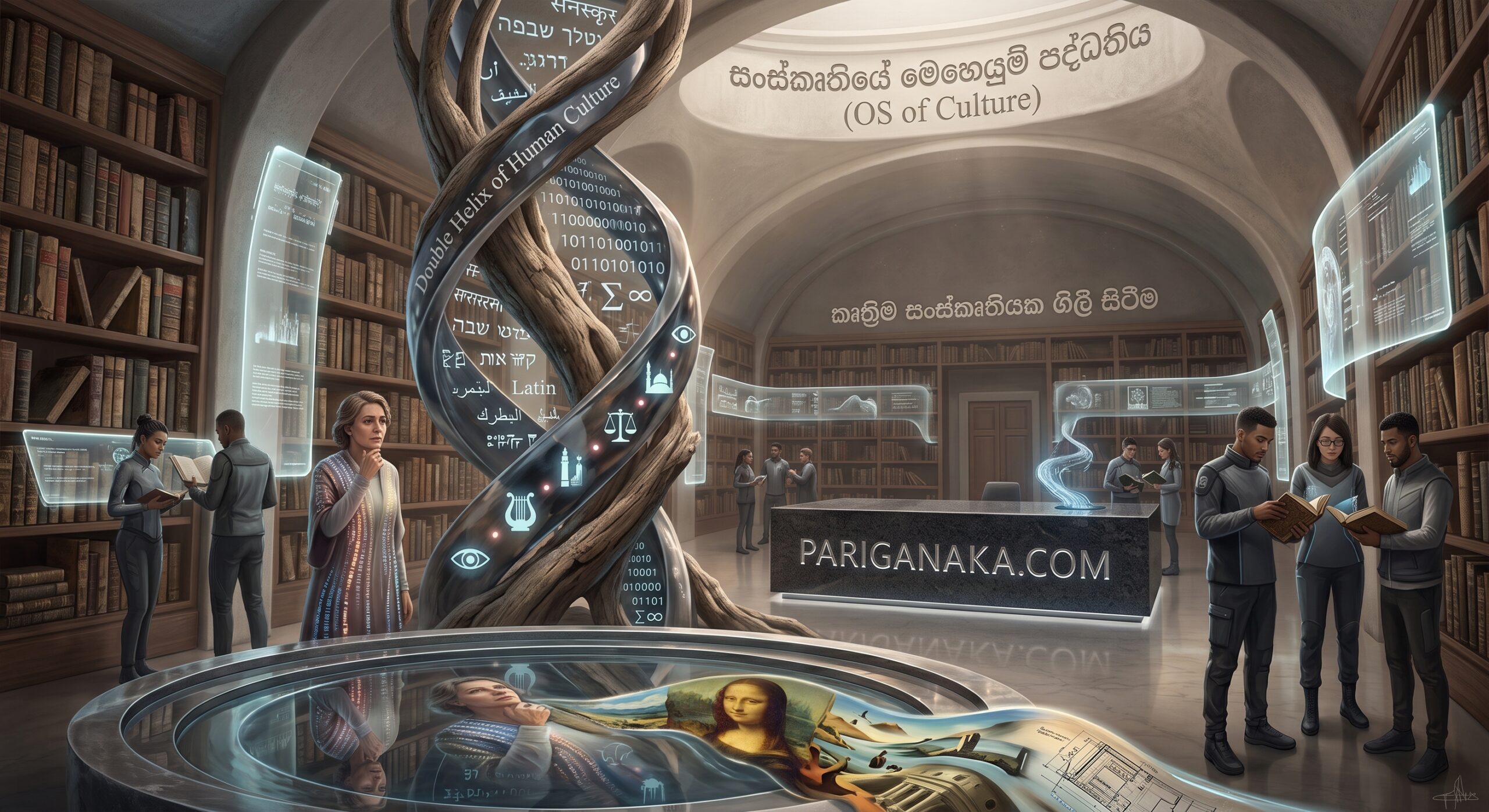
An alien intelligence with zero subjective consciousness has now broken into the operating system of human culture. For the first time in history, we are immersed in synthetic culture generated by systems that have never experienced grief, love, or pain.
Harari asked what would happen when algorithms know us better than we know ourselves. As this decade reveals, the real question is what happens to the human soul when the culture that feeds it is no longer human.
Leave a Reply